Content.
Insights, playbooks and customer stories from the people who run public transport every day.
Club Italia 2026 in Verona: ticketing, real-time info and AI
On 12-13 November Club Italia brings ticketing, digital payments, real-time info, fare evasion and AI to Verona: the six key convention themes explained.
Read more →ASSTRA Convention 2026 in Rome: the four themes to watch
On 21-22 October ASSTRA brings Italian local transport to Rome: funding, labour, tenders and digitalisation. Programme, session format and what matters.
Alternatives to Clever Devices and Syncromatics: How to Compare AVM Platforms
Which AVM platforms compare to Clever Devices or Syncromatics? Vendor categories, comparison criteria and the questions to ask at renewal.
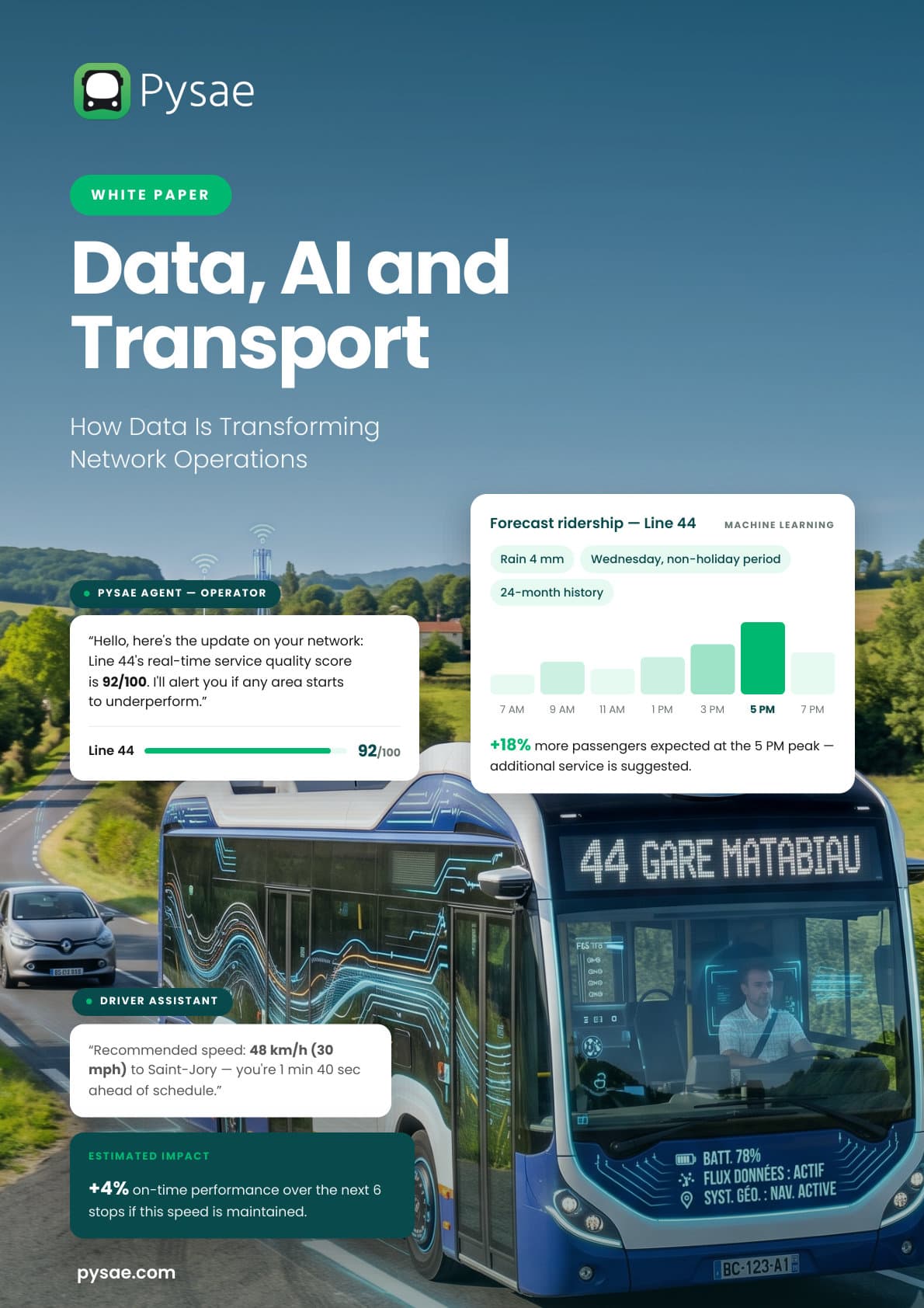
Data, AI and Transport
Artificial intelligence is already at work on transport networks worldwide. This paper maps AI's four levels, nine use cases, and the real-time data they need.
What Features Should an AVM System Have in 2026? A Buyer's Checklist
A must-have, should-have and nice-to-have checklist of AVM features for bus operators in 2026, from trip matching to GTFS-RT and cybersecurity.
Real-time passenger info and faster driver training on a 530-vehicle rural network
“Pysae helps us enormously to communicate on delays and temporary detours, especially during school holidays when demand peaks. The tool is also essential to quickly train the drivers who join our network each season.”
Real-Time Fleet Management for Public Transport: The Complete Guide
What real-time fleet management means for bus operators: AVM functions, passenger information, KPIs, hardware, EU data rules and how to choose.
Network Planning Solutions for Public Transport: The Complete Guide
What network planning software does, the main tool categories (modelling, service design, scheduling, GIS) and how to choose one.
Open Data & SAEIV Compliance in Europe
Real-time open data and SAEIV digitalisation are now EU statutory requirements. This white paper maps the regulation and the four pillars of a compliant SAEIV.
Eastern Europe's Bus Boom: EU Funds Bought the Fleet. Who Builds the Data Layer?
Poland and Romania are among Europe's top e-bus buyers. Real-time data lags behind, and the EU 2028 deadline is close.
InnoTrans 2026 in Berlin: what we saw in the public transport halls
Pysae visited InnoTrans 2026 in Berlin. A look at the public transport segment, the rise of AI and data, and what it means for bus and tram operators.
Read more →FIAA 2026 in Madrid: electrification, digitalisation and the bus as a connected platform
Pysae visited FIAA 2026 at IFEMA Madrid. What we saw at the bus and coach show, and what it means for operators in Spain.
How AI Is Changing Bus Network Planning: Frequency, Routing, and Real-Time Rebalancing
What AI really does in bus planning, from running times to real-time holding, and why it fails without reliable as-run AVM data.
Europe's Biggest Public Transport Networks by the Numbers: Ridership, Budget, Fleet Size
Europe's largest networks ranked on 2024 ridership, with the metric, perimeter and year stated on every line. And the five traps that break almost every published comparison.
One shared AVM for 21 independent bus operators and 500 coaches across the Gard
“Pysae is a powerful tool that lets us analyse the punctuality of our lines and improve stop times, keep our passengers better informed about day-to-day disruptions and answer their complaints more easily.”
GTFS-RT, SIRI, NeTEx: The Real-Time Data Standard Each European Country Actually Requires
France, the UK, Germany and the Nordics each combine GTFS-RT, SIRI and NeTEx differently. A country-by-country map of what each market actually requires from operators.
Spain's Regional Transit Modernization in 2026: What the New Concession Map Requires
Spain's new state concession map obliges every operator to run an AVM (called SAE in Spanish tenders) with real-time passenger information. What the 2026 timeline and the regional funding routes mean for bus operators.
Demand-Responsive Transport at Scale: How Large Operators Extend Their Core Network
How large metropolitan and regional operators run demand-responsive transport as a service layer on top of a fixed network, covering last mile and off-peak hours without adding a dispatch team.
Greece's National Bus Network Modernization: How Regional Operators Are Scaling Digital Operations
Greece's 62 regional KTEL operators carry most of the country's passengers and now face a legal requirement to digitise performance data. What scaling digital operations actually takes.
Read more →Passenger Information Systems: A Buyer's Guide for European Operators
A buyer's guide to passenger information systems for European bus operators: the four vendor categories you will meet, the criteria that separate them, and the questions that expose the gaps.
One Platform, One Contract: Why Nordic Operators Are Consolidating Their Transit Stack
Why Nordic bus operators are moving from four or five specialist transit systems to a single contract, what consolidation actually changes, and when it is the wrong call.
Fleet Telematics for Public Transport: How Many Boxes Does a Bus Actually Need?
Most buses carry three or four boxes. A decision framework for when to consolidate, and when the extra unit earns its place.
Real-time AVM for a ski-resort bus network: 8 lines live within 2 months in Morzine
“We needed an intuitive, responsive tool to handle traffic disruptions caused by changing crowds and weather. For example, a chairlift closed for technical reasons can mean quickly moving passengers to another one. Communicating vehicle arrival times to waiting passengers is essential.”
SIRI vs GTFS-RT: Which Real-Time Data Standard Fits Your Network?
Two standards, one decision. An architecture-level comparison for operators choosing how to publish real-time transit data.
What True Real-Time AVL Actually Looks Like (and What Most Platforms Fake)
What true real-time AVL for buses actually requires, and how to tell a genuine live-tracking architecture from a system that just refreshes fast.
The EU's Sustainable & Smart Mobility Strategy: what it means for bus operators
The EU's Sustainable and Smart Mobility Strategy explained for bus operators: what the 82 initiatives actually require on the ground.
Portugal's Carris Metropolitana: what Europe's biggest bus tender teaches operators
Carris Metropolitana in Lisbon: how a 1.2 billion euro tender coordinates multiple bus operators under one brand, and what it teaches on subcontractor supervision.
Read more →How to Choose an AVM System for Bus Operators
Fleet coverage, hardware-light vs hardware-heavy, integrations and deployment speed: the criteria that matter when choosing an AVM.
Nordic public transport benchmarks: how Helsinki, Stockholm, Oslo, Copenhagen and Reykjavík set the standard
How Helsinki, Stockholm, Oslo, Copenhagen and Reykjavík combine integrated networks, real-time data and clean energy to lead Europe
Passenger Information System Tender Requirements: What to Specify
The technical and functional criteria an AOM or operator should specify before publishing a passenger information system tender.
Monthly reporting cut from 2 days to 15 minutes with real-time AVM on 55 buses
“The authority wanted to speed up its digital shift to make the transport network more attractive, in line with a fast-growing area. Pysae supported us effectively despite the project's complexity, meeting our expectations precisely.”
EU urban mobility indicators: what the new reporting rules mean for transport operators
The European Commission adopted new rules on harmonised urban mobility indicators. What the regulation covers, the 2027 deadline, and what it means for transport operators.
Next Mobility Exhibition Milan 2026: what it tells us about the future of Italian public transport
Electrification, digitalisation and MaaS: the key themes of NME 2026 in Milan and what they mean for public transport operators.
How Scheduling Software Helps Bus Operators Manage the Driver Shortage
Faster absence coverage, fairer duties, and early visibility on gaps: how scheduling software helps operators manage the driver shortage.
How AVM Keeps Every Vehicle Paired to the Right Service
A single mislabeled bus breaks passenger trust. Here's how four layers of vehicle-to-service pairing make sure it never happens.
Read more →Yerevan Public Transport in 2025: Regulating Armenia's Bus and Metro Network
Yerevan renewed its entire bus fleet since 2020. Real-time regulation is now the missing layer behind that reform.
GTFS-RT in practice: what operators get wrong about real-time feeds
GTFS-RT has become the standard for real-time transport data, but valid does not mean reliable. The five most common feed mistakes.
Smart depot: what changes when your AVM knows where every bus is parked
When your AVM tracks every bus in real time, the depot stops being a black box. Here's what actually changes operationally.
Real-time AVM on 120 buses in Thionville: 73% of trips tracked from day one
“We asked ourselves where to start to improve our employees' working conditions, give information to our passengers and bring some transparency. We compared what was available and Pysae ticked almost every box, from operations management to passenger information. It is an ergonomic product, simple to roll out, and drivers welcomed it.”
How to track subcontractor performance in public transport
Delegating routes to subcontractors doesn't mean losing visibility. Here's how to monitor performance effectively with the right tools.
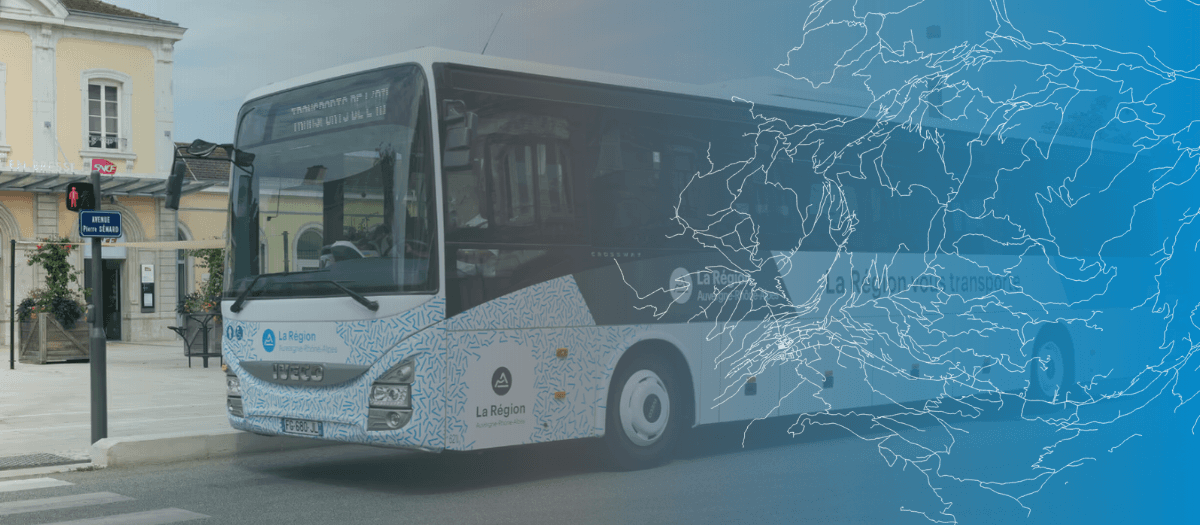
Real-time passenger info and faster driver training on a 530-vehicle rural network
The Régie des Transports de l'Ain runs 530 vehicles on urban, interurban and seasonal lines. Pysae AVM informs passengers in real time and speeds up seasonal driver training.
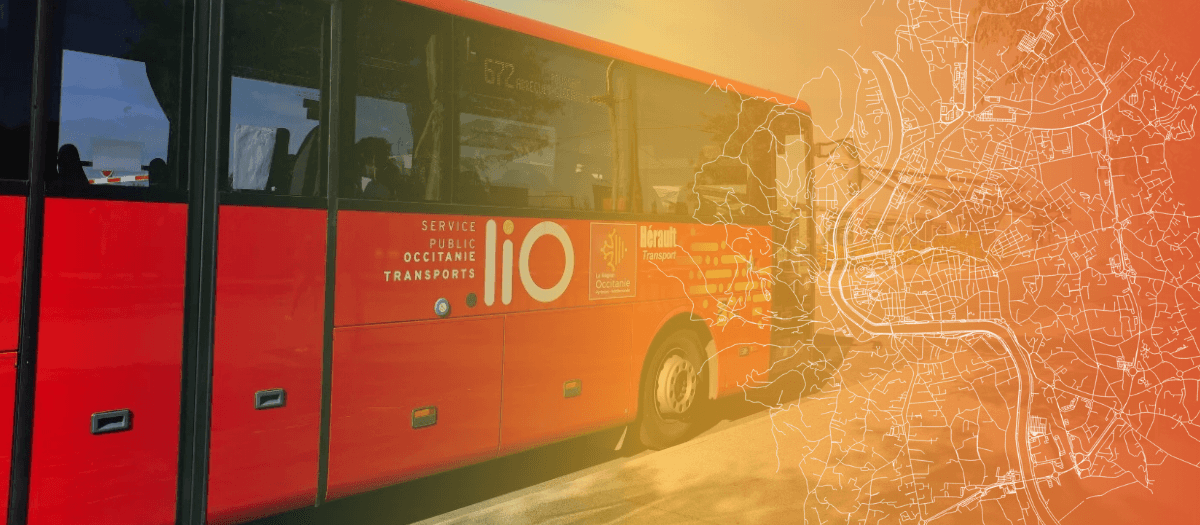
One shared AVM for 21 independent bus operators and 500 coaches across the Gard
COOP30, a cooperative of 21 SME bus operators, runs the LIO Gard network on one Pysae AVM: real-time tracking, driver messaging and passenger alerts.
 Customer stories
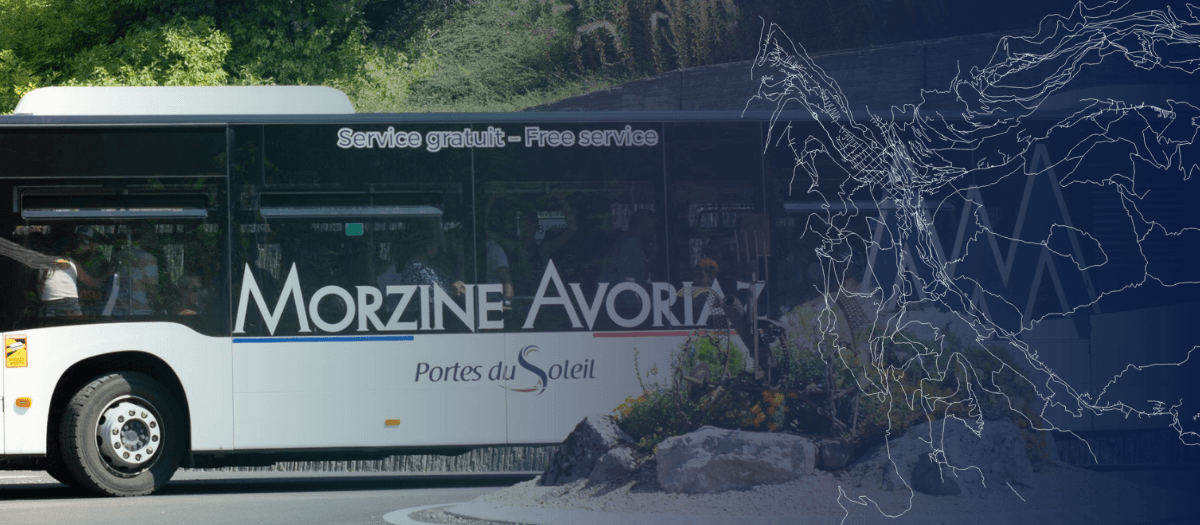
Real-time AVM for a ski-resort bus network: 8 lines live within 2 months in Morzine
Transdev runs Morzine's fare-free winter network in the Portes du Soleil. Pysae AVM went live 2 months after signing, with 19 seasonal drivers trained in a week.
Read more →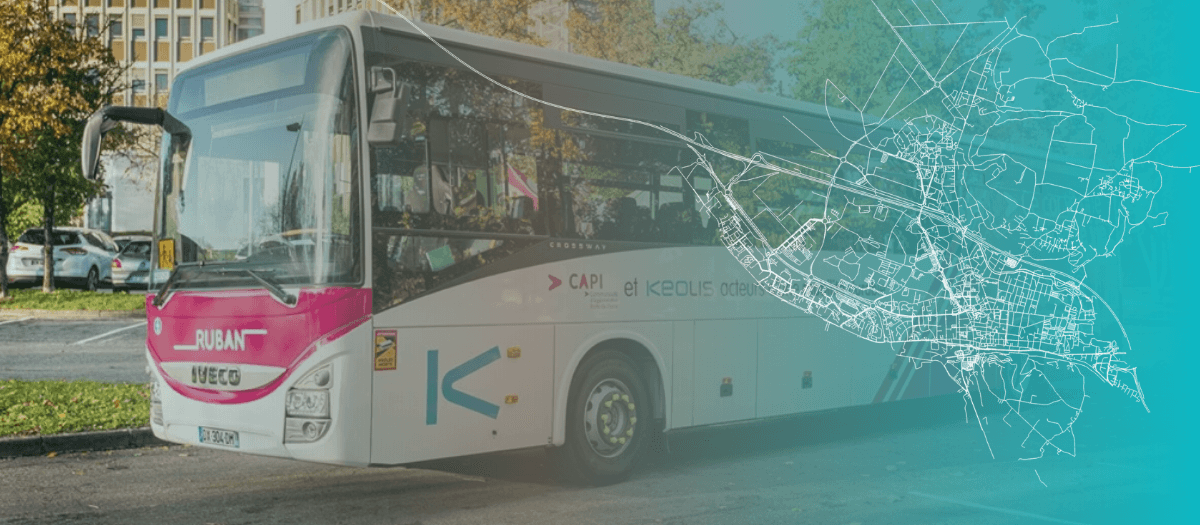
Monthly reporting cut from 2 days to 15 minutes with real-time AVM on 55 buses
Keolis Porte de l'Isère runs the Réseau Ruban for CAPI, between Lyon, Grenoble and Chambéry. Pysae AVM equips its 55 urban vehicles and automates reporting.
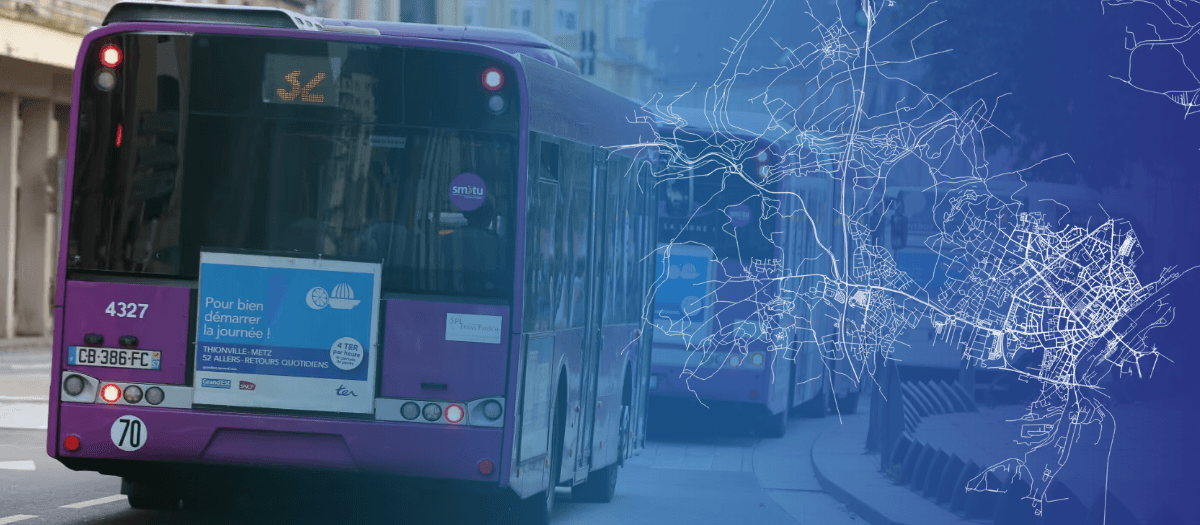
Real-time AVM on 120 buses in Thionville: 73% of trips tracked from day one
Keolis Thionville replaced an ageing passenger information system on the TeMo Moselle Nord network with Pysae AVM, integrated with Lumiplan, Kuba Pay and GTFS-RT.
Doubling ridership on a fare-free network, measured at 98.2% accuracy with real-time AVM
“Just because a network is free-to-ride doesn't mean passengers expect any less. We had to maintain a high service standard: reliability, responsiveness and clear information at all times.”
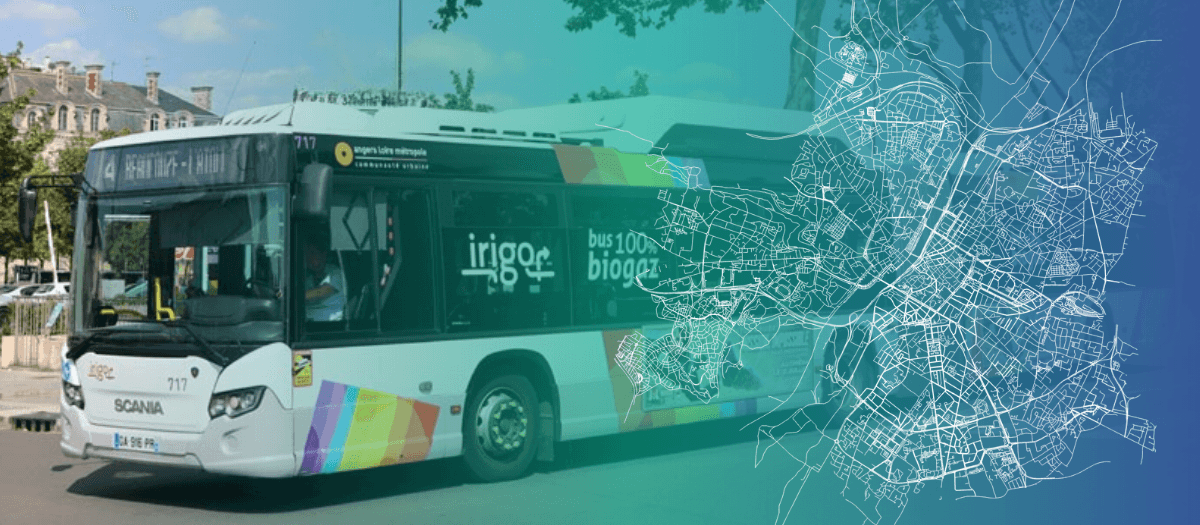
70% fewer passenger complaints with real-time AVM for 250 drivers in Angers
RD Angers (RATP Dev) runs the Irigo network. Since 2020, Pysae AVM supervises its suburban lines and school routes: 70% fewer complaints, 90% fewer human errors.
GTFS-RT in practice: from GPS to the passenger's screen
From a GPS ping to “next bus in 4 min”: how real-time passenger information actually works, the three GTFS-RT feeds, and why feeds get rejected.
SaaS AVM and electric buses: adapting your system to the energy transition
How to adapt your AVM system for electric buses joining your fleet: energy data integration, state of charge, charge sequencing and unified supervision.
Onboarding 200 drivers to a new mobile AVM app in two weeks
A field-tested playbook for rolling out a driver app across a large network, without disrupting a single day of service.
Read more →5 integration patterns between AVM and HR/payroll systems
From flat-file exports to real-time APIs: the five ways operators connect their AVM to Hastus, SAP, Acerta and other back-office systems.
AVM, AVL, SAEIV: a terminology guide for transport operators
The same technology has a different name in every country. Here's what these acronyms actually mean, and why it matters when you compare vendors.
Deploying an AVM across 30 lines: real timelines and key factors
8 weeks on average for a SaaS AVM deployment across 30 lines. What speeds things up, what slows them down, and what changes after.
70% fewer passenger complaints with real-time AVM for 250 drivers in Angers
“We cut customer complaints by 70%. Our drivers' trips are now better tracked and our passengers get real-time information, which has greatly improved their experience.”
How to calculate the real ROI of an AVM deployment
Beyond the licence cost: the hidden savings and revenue effects that determine whether an AVM deployment actually pays for itself.
How a scheduling module reduces duty allocation errors on a bus network
Scheduling conflicts, oversights, duplicates: a planning module eliminates human error through a unified database.
AVM vs transport management platform: what really changes
An AVM supervises. A transport management platform unifies. A practical breakdown for bus operators.
Best lightweight AVM solutions for private bus contractors
A practical guide to choosing an AVM that fits private operators: lean, fast to deploy, and built for real constraints.
Read more →How to integrate GTFS-Realtime and SIRI with existing bus fleet hardware
GTFS-RT and SIRI are both essential in Europe. Learn the integration steps, common pitfalls, and what to look for.
Alternatives to IVU or Trapeze for small and medium bus fleets
IVU and Trapeze are built for large networks. If you run 20 to 300 buses, discover what agile SaaS alternatives deliver.
Telematics vs AVM: Why counting kilometers is no longer enough
Accuracy is a trap. Discover why contextual intelligence matters more than raw GPS tracking for managing your bus fleet and subcontractors.
Pysae in France: Powering 10,000 Buses for Global Operators
Discover how Pysae manages 10,000 buses for Keolis, Transdev, and RATP, providing high-quality real-time data across the French network.
Making Public Transport Greener: Simple Steps for a Low-Carbon Fleet
Learn how eco-driving and smart route planning can significantly reduce your bus fleet's CO2 emissions and fuel use.
How to Cut Bus Fleet Costs Without Reducing Service Quality
Fuel, maintenance, idle time: discover how smart data helps you cut bus fleet operating costs without reducing service quality.
Why Accurate Bus Times are the Key to Passenger Trust
Ghost buses break passenger trust. Discover why accurate real-time bus times are the foundation of a reliable transit network.
Read more →Hardware-Light vs. Hardware-Heavy: Finding the Right Bus Tracking Solution
Proprietary black boxes or cloud software on standard tablets? A practical comparison of hardware-light vs hardware-heavy bus tracking.
How to integrate Pysae with Hastus or ABC Planning
Pysae integrates natively with Hastus and ABC Planning via GTFS imports and API. Here is how it works in practice.
Stop buying expensive hardware for bus tracking: The SaaS revolution
Heavy proprietary tracking boxes are a liability. Discover why the SaaS revolution is making expensive bus hardware obsolete.
Bridging the Gap: What 15 Countries Taught Us About the Future of Public Transport
Insights from 15 countries at Smart City Expo Barcelona: urban mobility challenges are universal, and the demand for agile technology is immediate.
Smart City Expo World Congress 2025: Pysae in Barcelona
Pysae exhibited at Smart City Expo World Congress 2025 in Barcelona. What we presented, what we heard from cities in more than 15 countries, and our thanks.
What does a public transport supervision system (AVM) cost in 2026? The main cost drivers
What does it cost to set up a public transport supervision (AVM) system in 2026? The five cost drivers: onboard hardware, licence versus SaaS, setup, training, and support.
How IoT and AI Are Transforming Public Bus Operations
Discover how IoT and AI are reshaping public bus operations, from predictive maintenance to real-time supervision, and how tools like Pysae help.
Read more →Why GTFS Realtime Is Essential to Make Public Transport More Attractive
GTFS Realtime has become a key standard in public transport. Learn how this open format helps operators share reliable real-time information.
Understanding operations support platform: essential for transport operators
The Operations Support Platform system acts as a multifaceted, intelligent resource, serving passengers, drivers, and operators.
Keep passengers informed effortlessly with our real-time display screen
Our latest innovation, the Passenger display screen, makes it easier than ever for your passengers to access the information they need.
Managing bus detour: Trip Modifications & GTFS
The management of bus detour is a major issue for operators, caused by various factors such as roadworks, accidents or other events.
Focus on Passenger Information Systems (PIS): how can they be connected to an operations supervision solution?
Display screens, loudspeakers, wind vanes... there are many passenger information systems on board public transport vehicles. But how do they work?
Why passenger information is now a top priority for transportation operators
The centrality of passenger information to transport providers hinges on one core objective: ensuring customer satisfaction.
Iris, passenger counting solution, connected to Pysae
One of the primary challenges that confronts every transport network operator is the ability to gather comprehensive and precise passenger data.
Read more →Elevate your passengers' experience with the new Pysae real-time passenger information app
The internet has revolutionized how we access information, while smartphones have unlocked a realm of new possibilities for travelers.
Pysae is the first supervision solution to interface with the Hanover Displays PIS via an IP connection
For over 35 years, Hanover has specialized in the design, development and manufacture of on-board electronic Passenger Information systems.
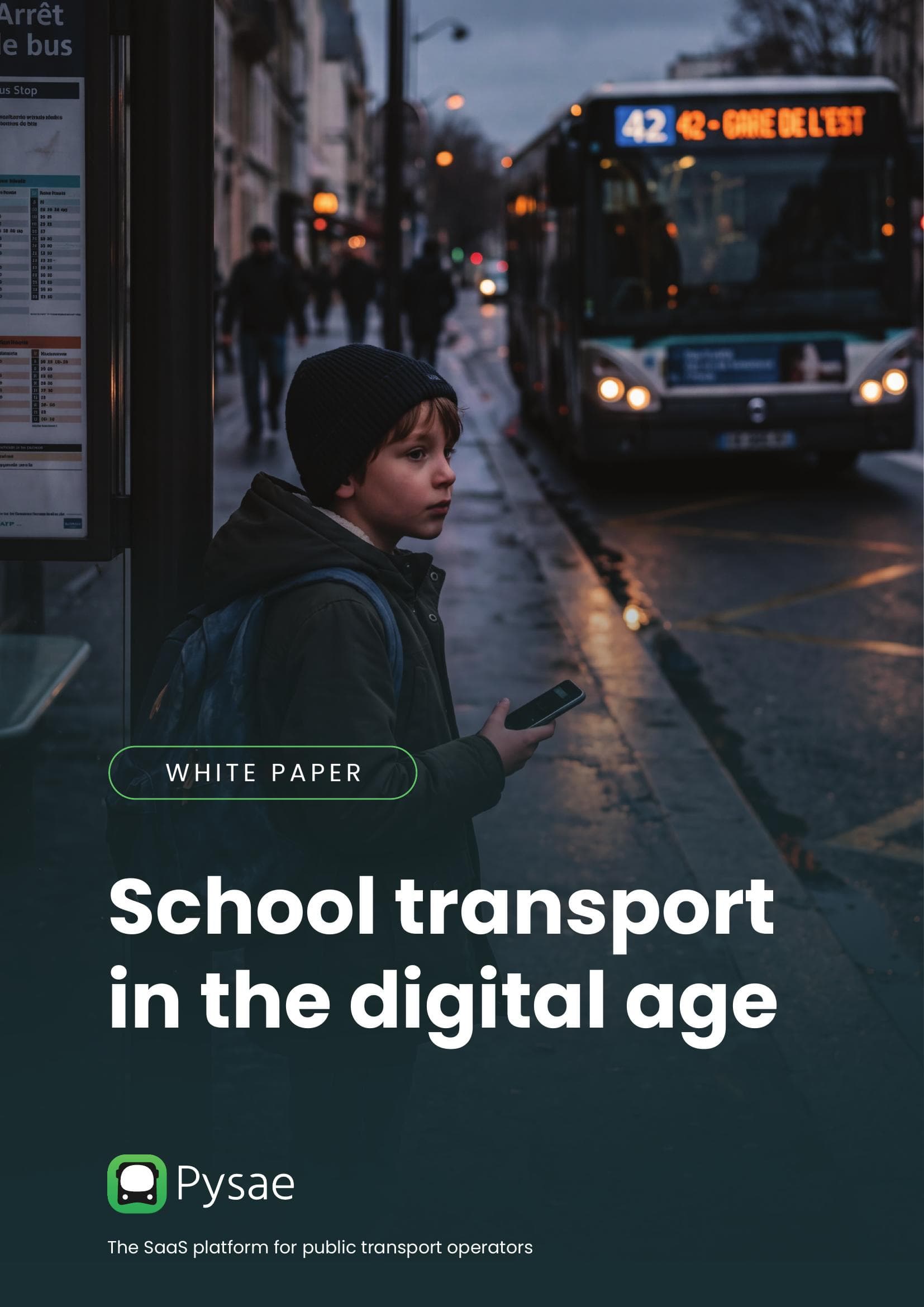
School Transport in the Digital Age
School transport carries specific legal, safety and communication requirements that generic transport software ignores. This paper covers the digital stack that progressive operators in Spain and Italy are deploying.
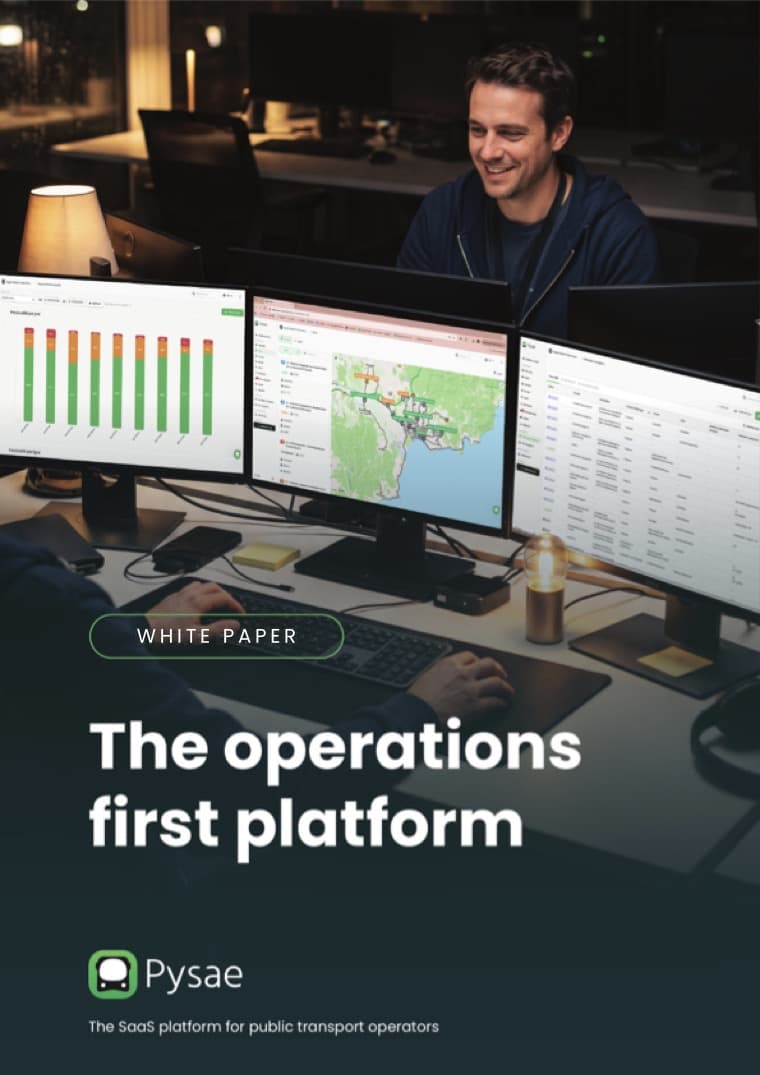
The Operations-First Platform
A positioning paper on the shift from scheduling-centric to operations-first platforms, and what it means for operators evaluating vendors in 2025–2026.
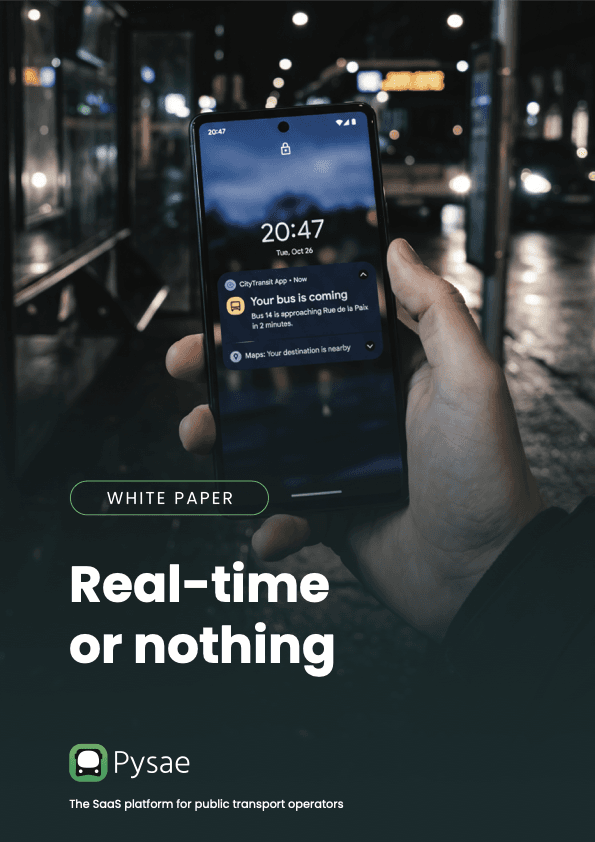
Real-Time or Nothing
A technical reference for operations directors and IT managers who want to understand what genuine real-time AVL architecture looks like, and what it unlocks.
The Hidden Cost of Fragmented Operations
When your scheduling tool doesn't talk to your dispatch system, and your dispatch system doesn't talk to payroll: the real cost is invisible until it isn't.